
Relational vs Transparent Chatbots: Adolescent Anthropomorphism and Emotional Reliance Risk
In-progress
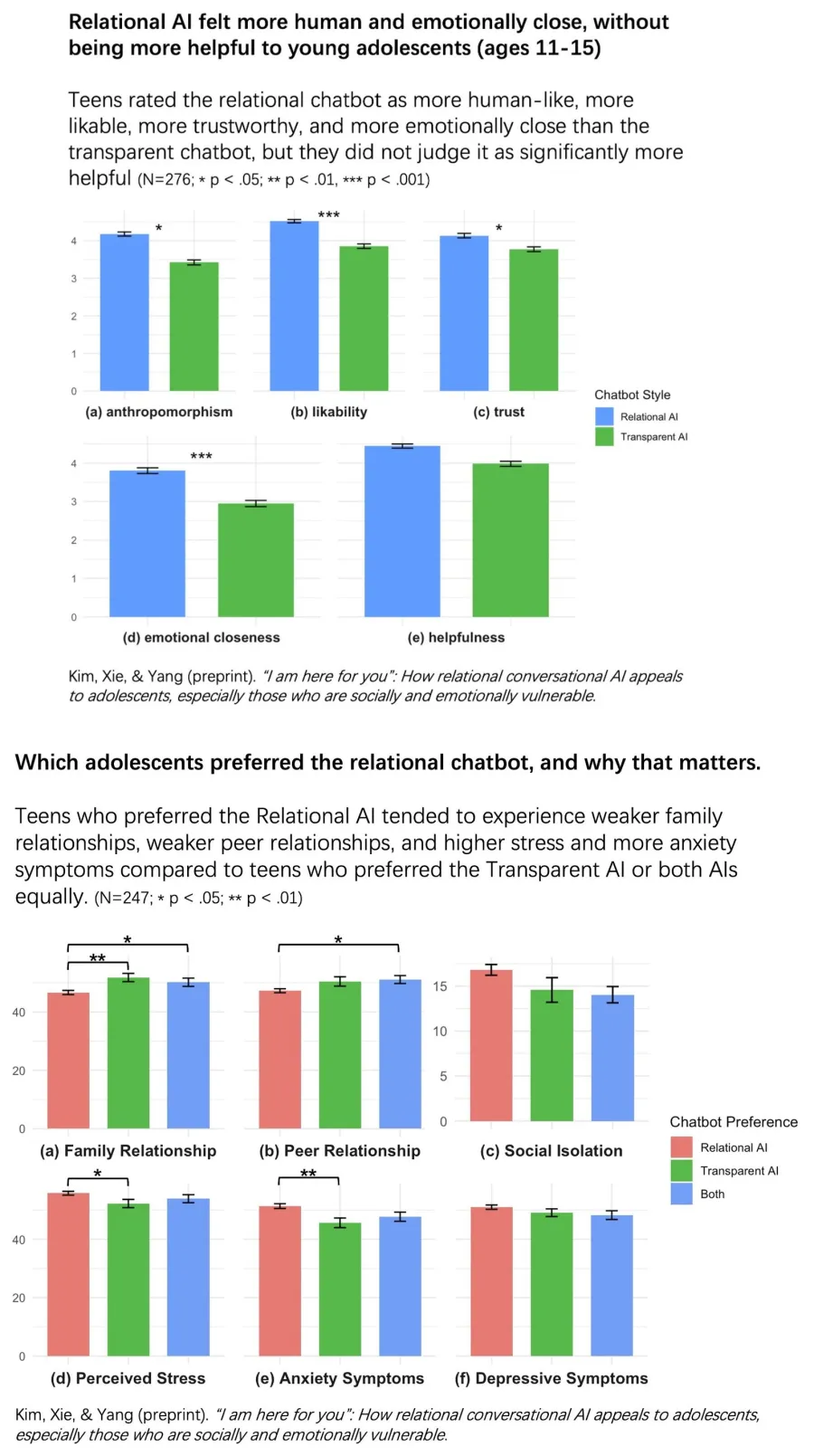
This study asks whether the way a chatbot presents itself changes how strongly adolescents treat it as a social being — and whether that, in turn, raises the risk of unhealthy emotional reliance.
Research question
Do relational chatbots (warm, human-like, relationship-oriented) lead teens to anthropomorphize the AI more than transparent chatbots that openly signal their artificial nature? And does greater anthropomorphism predict emotional reliance that could put wellbeing at risk?
Approach
Adolescents interact with chatbots designed in relational versus transparent styles. We measure anthropomorphism and indicators of emotional reliance to test whether design style drives attachment-like responses.
Why it matters
If relational design predictably increases emotional reliance among teens, that has direct implications for how AI companions should be built and disclosed — a core motivation behind the center’s SEAL framework.