
Research
Our studies on how children and adolescents relate to, rely on, and understand AI.
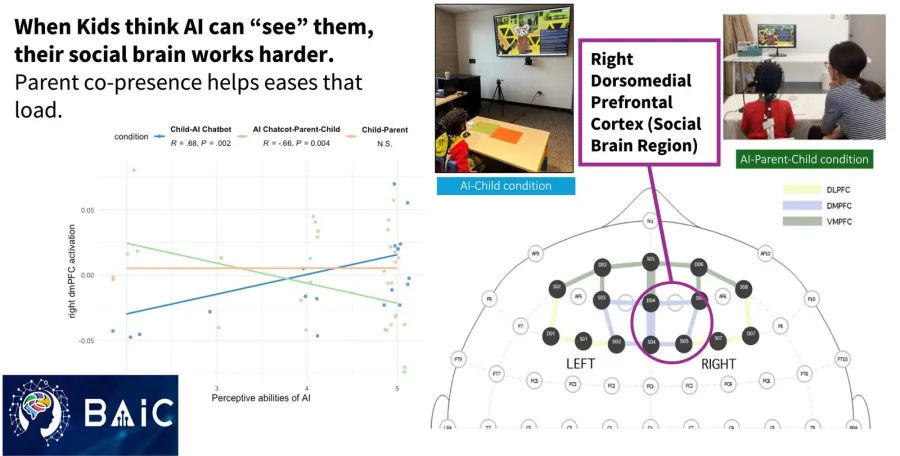
How Young Children Understand Social Chatbots: Anthropomorphism, Brain Responses, and Parent Co-Use
How young children make sense of social chatbots — measured through anthropomorphism, brain activation, and the role of a parent present alongside.
In-Lab Teen–Chatbot Conversations: Relational vs Transparent Styles and Social Stress
How a chatbot's conversational style — warm and relational versus clearly transparent — shapes teens' experience of social stress.
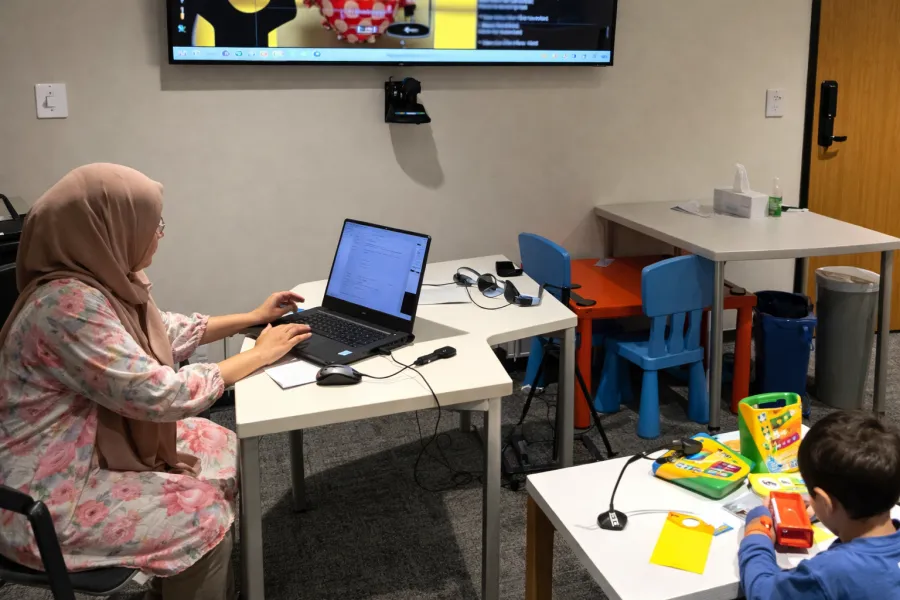
Creativity and Social Communication in Child–AI Storytelling
Watching how children create stories together with an AI partner — and what it reveals about creativity and communication.

Measuring Youth Overreliance on AI: A Developmentally Appropriate Dependency Scale
Building a validated scale to measure when young people's reliance on AI tips into unhealthy dependency.
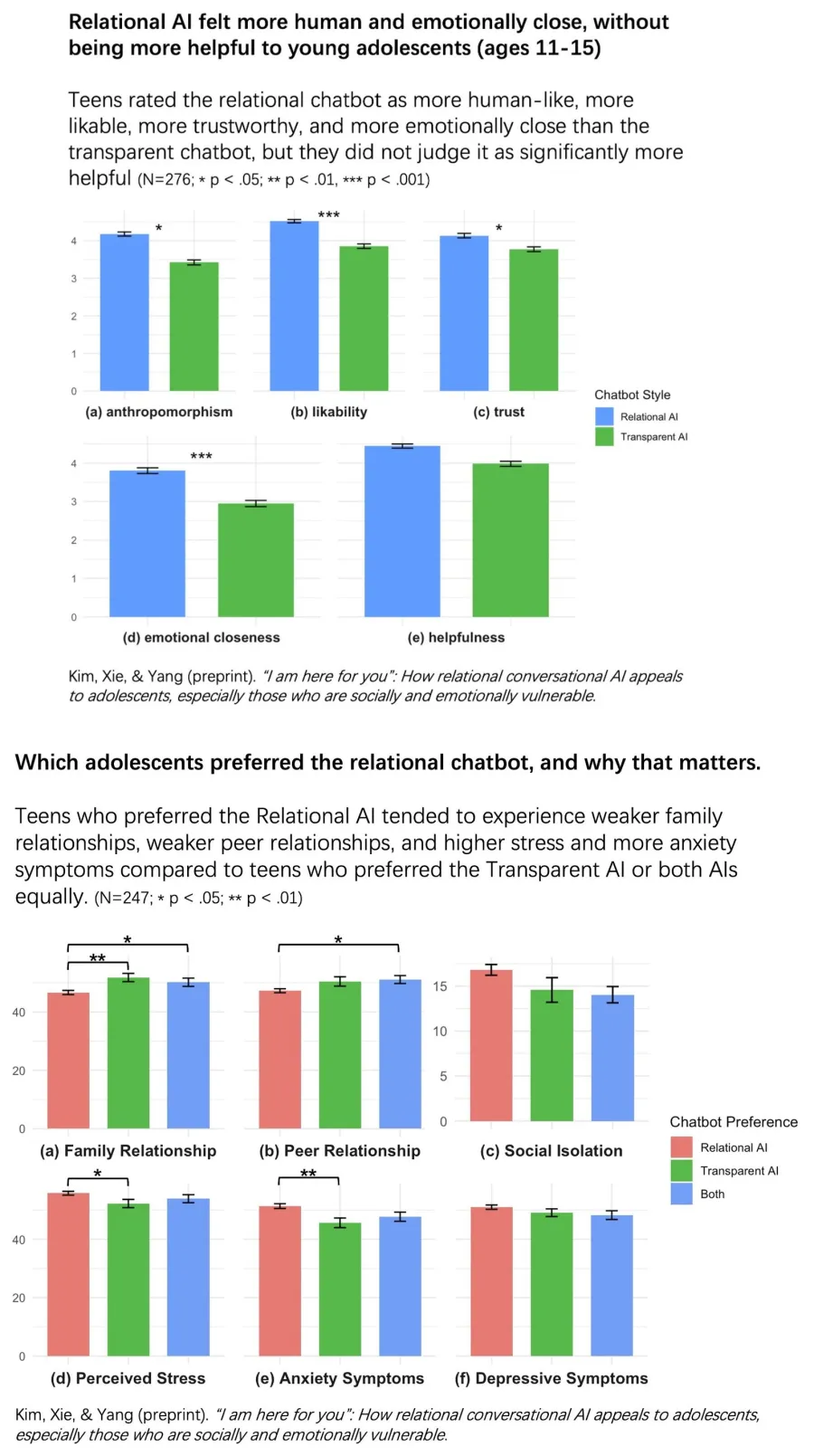
Relational vs Transparent Chatbots: Adolescent Anthropomorphism and Emotional Reliance Risk
Whether relational versus transparent chatbot styles drive teens to anthropomorphize AI and form emotionally risky reliance.
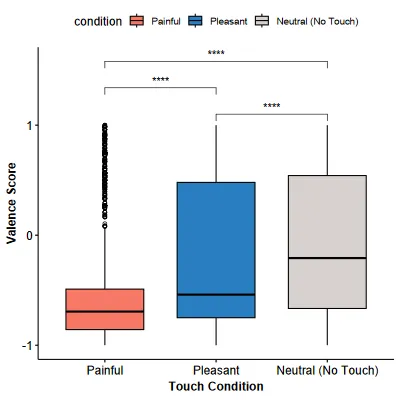
Investigating Human Empathy for Robot Pain using fNIRS
Using brain imaging to ask whether people empathize with a robot in pain the way they do with another person.